The rise of the microbiome has disrupted the hierarchy of ingredients among supplement manufacturers. Customized formulas, long deemed too complex to industrialize, are now making their way into the catalogs of major brands. The boundaries between nutrition, mental well-being, and sports performance are blurring, pushing laboratories to reinvent their products. Health claims, now more strictly regulated, stimulate research and encourage the emergence of new validation protocols.
Why the dietary supplement market is undergoing a true revolution
In France, the dietary supplement market shows spectacular growth with a 25% increase between 2020 and 2023. Italy and Germany are following the same trend, driven by a growing interest in preventive health, natural products, and an essential quest for transparency. Pharmacies, specialty stores, and digital platforms are multiplying new offerings, creating a landscape where integrating a supplement into one’s wellness routine has become commonplace.
Public expectations have never been higher. The lifestyle adopted today is more thoughtful than ever: personalized nutrition is moving from concept to reference. Major brands find themselves at a crossroads: clean label, transparent traceability, and a firm commitment to the planet are now part of their specifications. Consuming better, recycling, and choosing well-developed formulations are all criteria that resonate with a clientele eager for meaningful purchases. The distinction between traditional food and nutraceuticals is becoming blurred, integrating supplements into everyday life.
Among the most visible changes, three key areas are emerging:
- Redesigned formats: convenient gummies to take on the go, sticks, adaptable powders, sprays for every situation—every moment of daily life has its custom supplement.
- Transparency takes precedence: clear composition, displayed origin—trust is now built on facts.
- Eco-responsibility is not just a buzzword: reduced packaging, local sourcing, logistics designed to minimize impact—the industry is committing.
All of Europe is caught up in this dynamic. Dietary supplements are transforming our approach to care and health. The example of jollymama speaks volumes: the brand combines galenic advancements, scientific validation, and a focus on user comfort. This model embodies a new wave where products, information, and support form a coherent ecosystem. Now, holistic health, energy, and well-being are viewed as a whole, rhythmically guided by daily rituals tailored to each individual.
What innovations are transforming our consumption and wellness habits?
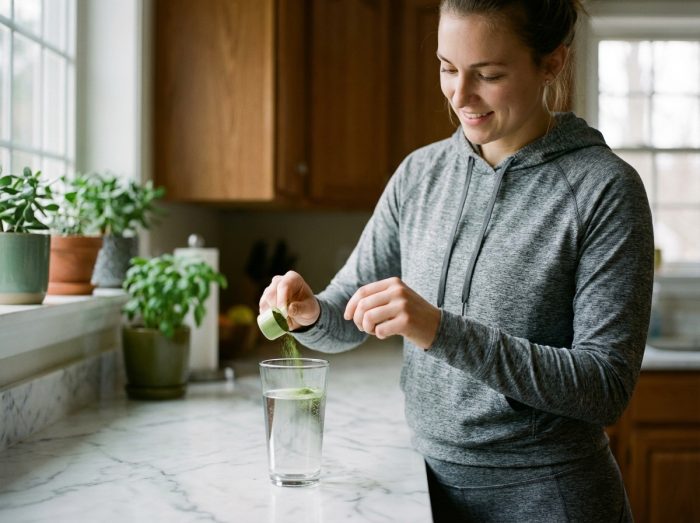
Dietary supplements no longer resemble those from five years ago. Formats have adapted to current lifestyles: chewable gummies, discreet sublingual sprays, powders to mix into any drink. On-the-go solutions fit into every pocket, at work, in the gym, or at home. The user experience, far beyond a simple action, now matters when making a choice. Crafted flavors, pleasant textures, reinvented packaging—practicality meets pleasure and trust.
The ingredient list has also evolved. Emphasizing scientific rigor: ashwagandha KSM-66, Cartidyss, EPAX, Curcumin C3 Reduct, as well as marine collagen and antioxidant extracts reveal a focus on tangible results. Consumers are proving this: they seek formulas that demonstrate their effectiveness, not just attractive promises.
Throughout the supply chain, technology is redefining the offer:
- Micro-encapsulation and delayed release protect active ingredients and optimize their absorption.
- Precision fermentation increases bioavailability while facilitating the attainment of true clean labels.
- Artificial intelligence adjusts recommendations and dosages for a personalized experience, closely aligned with individual needs.
Supplement or functional food? The distinction is gradually fading. Galenic innovations, sticks, liquid shots, soluble powders are bringing flavor and meaning back to supplement intake. Today’s users want results, but without compromising on use or practicality. In this new equation, science engages with design to completely rethink the relationship with daily nutrition.

Towards more responsible nutrition: how to adopt tomorrow’s trends with confidence
The clean label is now the benchmark: clear ingredients, short lists, the exclusion of unnecessary additives. Expectations have sharpened: impeccable traceability, transparency about origins, detailed manufacturing methods, mention of the production site. Omitting French manufacturing or trust guarantees (AB, Ecocert, ISO, HACCP, GMP) during purchase is no longer common. Where ambiguity once reigned, citizen control and labels provide reassurance.
Eco-responsibility extends to all stages, not just packaging. From raw materials to final distribution, every choice aims for relevance and minimizing environmental impact. The collective motto can be summed up as “consume less, but better” by adopting short, effective formulas designed for the planet. This demand accompanies the rise of personalized nutrition: everyone adjusts their routine to maintain their health, mental balance, vitality, or appearance, according to ultra-specific needs.
The rules have never been stricter. Claims are subject to validation, labels are rigorously awarded, and controls are strengthened by the DGCCRF, EFSA, and according to regulation EC 1924/2006: compliance is now the standard. It is becoming natural to favor brands that prioritize quality processes, clearly exposing their methods and proofs. To adopt a safer approach, one reads the label, investigates the origin, and demands proof of commitments. It is through this active vigilance that trust is established in a sector that transforms curiosity into rigor.
The transformation of dietary supplements is just beginning. Tomorrow, new gestures, perhaps unexpected, will open new horizons for those on the lookout for health in motion.