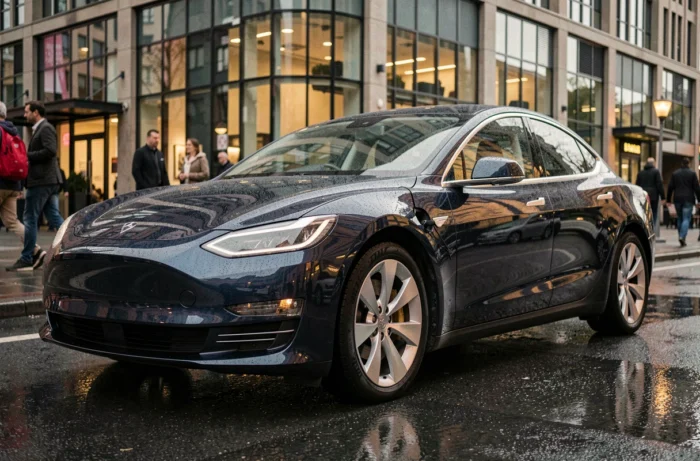
The automotive industry in 2026 is defined less by its powertrains than by the regulations and infrastructure governing their rollout. The Euro 7 standard, the digital battery passport and the expansion of the public charging network are simultaneously changing what manufacturers can sell, what buyers can verify and what local authorities need to install. These three areas are shaping automotive trends for the years ahead.
Euro 7 standard: how emissions regulations are changing the automotive industry
The Euro 7 standard, which is set to apply to new cars and light commercial vehicles from 29 November 2026, redefines the scope of monitored emissions. Exhaust gases remain covered, but the regulation adds two categories that were previously overlooked: particles from brakes and tyres.
Wear on brake pads and tyres produces microparticles that disperse into the air and soil. Euro 7 sets limits for these emissions, requiring suppliers to rethink the composition of brake linings and rubber compounds. This requirement has a greater impact on electric vehicles, which are often heavier because of their batteries, and therefore put more strain on their tyres.
The regulation also sets durability requirements for onboard batteries. An electric vehicle approved under Euro 7 must guarantee a certain level of battery performance over a specified period and mileage. Following the latest market developments on actualite-voitures.fr shows just how much this standard is reshaping manufacturers’ technical priorities.
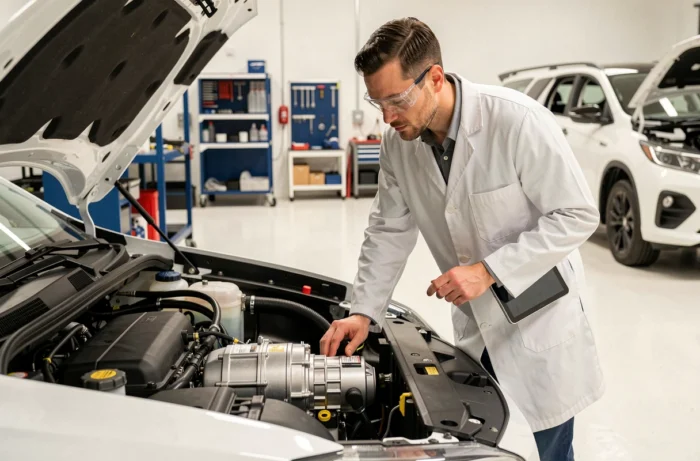
Digital battery passport: traceability and the used-car market
From 18 February 2027, the European battery regulation will require a digital passport accessible via a QR code for every electric vehicle battery. This digital document brings together information on the battery’s chemical composition, initial performance and state of health.
What the battery passport contains
- Detailed chemical composition, including the origin of the raw materials used in the cells
- Rated performance (capacity, internal resistance) measured at the end of production
- Up-to-date state of health, reflecting actual degradation after use
This system is transforming the used electric vehicle market. Buyers of second-hand cars will be able to scan the QR code and obtain a reliable battery assessment, without having to rely solely on the seller. An electric vehicle’s residual value will depend directly on its battery passport.
For manufacturers, the passport creates a traceability requirement across the entire supply chain. Every batch of cobalt, lithium or nickel will need to be documented. This requirement benefits supply chains that have already established robust logistics tracking and penalises those that rely on opaque intermediaries.
Public charging network: global figures and local realities
According to the International Energy Agency, more than 5 million public charging points were recorded worldwide at the end of 2024. More than 1.3 million points were added that year alone. Growth is rapid, but it masks considerable geographical disparities.
China accounts for the majority of installed charging points. Europe is making progress, driven by national regulatory requirements, but charging-point density remains highly uneven from one country to another. Rural and suburban areas are structurally lagging behind major urban centres.
Private and public charging: two complementary approaches
The IEA report highlights the central role of private charging in everyday use. Most charging takes place at home or at work, while public chargers are used mainly for long-distance journeys or by people without a garage.
This distinction has practical implications for business models. Public charging operators cannot count on high utilisation rates in residential areas where private charging dominates. Investment is therefore concentrated along motorways and at shopping centres, where vehicle traffic helps ensure profitability.
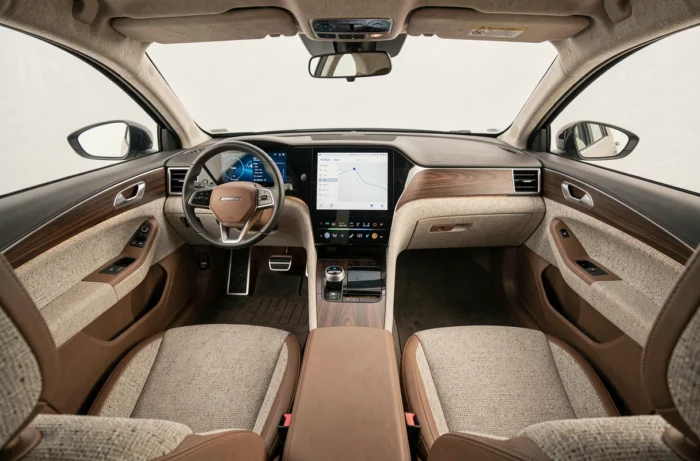
Solid-state batteries: promising technology, uncertain timeline
Solid-state batteries replace liquid electrolytes with a solid material, increasing energy density and reducing the risk of fire. Several manufacturers and suppliers have announced working prototypes, and some have indicated that production could begin between 2027 and 2030.
The potential gains are significant: at the same volume, a solid-state battery could store more energy than a conventional lithium-ion battery. This would mean greater range without increasing vehicle weight, a factor that directly affects tyre wear and energy consumption.
Large-scale production remains the main obstacle. Industrial-scale production of a uniform solid electrolyte at a cost compatible with the automotive market has yet to be demonstrated. No mass-produced vehicle currently uses this technology. Manufacturers’ announcements should be viewed with this caveat in mind.
The Euro 7 standard, the digital battery passport and the expansion of the charging network are creating a regulatory and logistical framework that will shape the future of the automotive industry just as much as technical innovation. Models arriving on the market in the coming years will first need to meet these requirements before delivering on the technological promises showcased at motor shows.