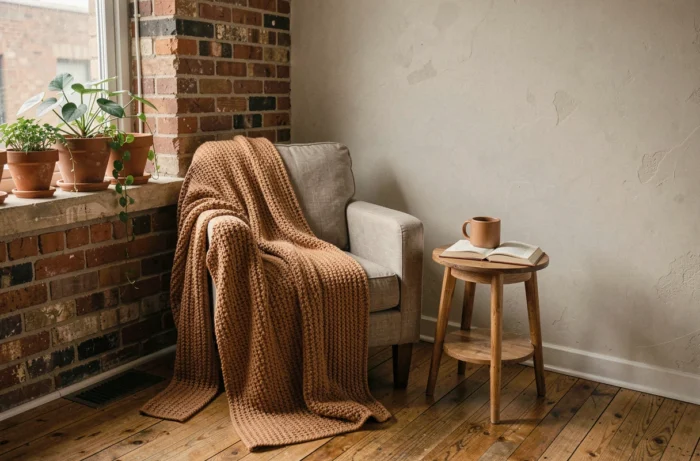
A throw that slips behind the sofa, a stained cushion that gets discreetly turned over, a piece of furniture pushed against the wall to hide a damp patch—we all know these little tricks. Creating a warm, inviting home is about more than choosing pretty things. A cosy atmosphere also depends on how you look after your home day to day, and some décor choices can make that much easier—or much harder.
Airflow and furniture: what cosy décor can sometimes conceal
It’s rarely the first thing we think of when talking about décor, and that’s precisely the problem. A cosy living room with bulky furniture pushed up against an exterior wall can restrict airflow and create hidden areas of damp. A stain that keeps coming back in the same spot isn’t just an eyesore; it often points to a leak or ventilation issue that needs to be dealt with first.
Leaving a few centimetres between furniture and exterior walls is usually enough to limit this problem. It’s also worth checking that ventilation grilles aren’t blocked by furniture, a curtain or a decorative object placed in front of them without a second thought.
Ventilating your home is still important, even in the middle of winter when you’re trying to keep the heat in. Briefly opening the windows after a shower or cooking removes moisture far more effectively than leaving a window ajar for hours. For practical tips on combining décor and home maintenance with La Maisonnette De Barbichounette, explore these often-overlooked topics that traditional décor guides tend to miss.

Cosy living room textiles: choose fabrics you can actually clean
Corduroy, crumpled linen, bouclé wool: these textures help create a warm, inviting atmosphere. We pile them on the sofa and drape them over an armchair. But after a few months, reality sets in: some fabrics soak up everything and are difficult to wash.
Before buying a throw or cushion covers, it’s worth checking the fabric composition and care instructions. Machine-washable fabric that can be washed at a low temperature makes all the difference day to day. A cushion with a removable cover takes ten minutes to clean; one with a fixed filling ends up in the cupboard.
- Heavy cotton and cotton-linen blends stand up to frequent washing without losing their shape, and their texture stays pleasant to the touch even after several cycles.
- Removable woven polyester covers do a good job of imitating velvet and are machine-washable, making them a practical choice for homes with children or pets.
- Merino wool, often used for high-end throws, needs to be hand-washed or put through a delicate cycle—something to bear in mind before splashing out on an expensive one.
You can also ask the retailer what treatments have been applied to upholstery fabrics. Some stain-resistant treatments make cleaning easier, but it’s worth asking what they contain.
Warm colours and lighting: create an inviting atmosphere without repainting every season
White or light beige walls are still the easiest foundation for a warm interior that won’t feel dated. Add colour through accessories: cushions, vases, picture frames and candles. This makes it easy to change the mood without major work, simply by swapping out a few items from one season to the next.
Lighting has a greater impact than paint on how warm a room feels. A single ceiling light flattens the space and makes it feel cold, even with earthy-coloured walls. Add several light sources at different heights: a table lamp by the sofa, a string of lights along a shelf, a reading lamp beside the armchair.
Warm-white bulbs (around 2,700 kelvins—the information is on the packaging) can transform a room straight away. It costs next to nothing, and the effect on the cosy atmosphere is immediate.
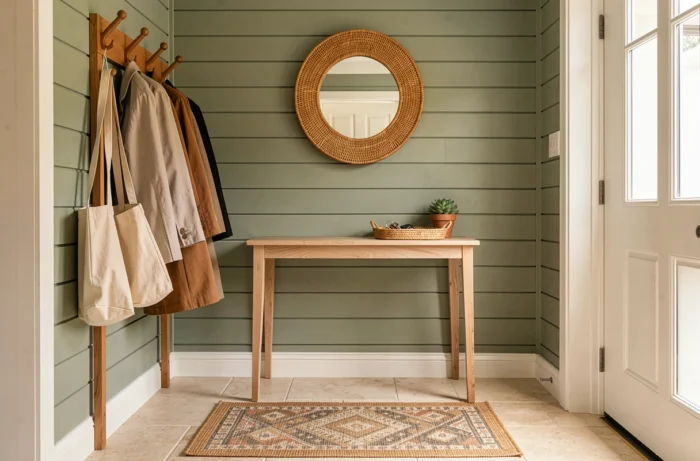
Wooden furniture and repairability: invest in pieces that last
Solid wood furniture adds visual warmth and is a classic choice for a cosy home. But not all wooden furniture is equally durable. Choosing furniture that can be taken apart and has replaceable parts means you won’t have to throw the whole thing away if a drawer breaks or a leg splits.
Repairability is becoming an important consideration when choosing furniture for a sustainable home. When shopping, check a few simple things:
- Are the screws and fixings accessible, or is the furniture glued together? A screwed joint can be repaired; a glued one usually means the piece gets thrown away.
- Does the manufacturer offer spare parts (hinges, handles, legs)? Some brands sell them online; others don’t.
- A solid wood tabletop can be sanded and refinished; a laminate one can’t. The difference in the initial price pays off over the furniture’s lifetime.
Everyday care for wood in the living room
Refresh a waxed wooden piece with a soft cloth and a little beeswax once or twice a year. Oiled wood needs a coat of the appropriate oil about every six months, depending on how it’s used. Varnished wood is the easiest to maintain: a damp cloth is all it needs for everyday cleaning.
Avoid placing a coffee table made of unfinished wood right next to a radiator, as direct heat can cause cracks over time. A coaster or placemat protects the surface from water rings—a small step that can help preserve the furniture for years.
The most successful warm, inviting décor is often the kind you stop noticing because it works effortlessly. Easy-to-wash textiles, repairable furniture, well-distributed lighting and a space that can breathe: these simple choices stand the test of time without requiring you to rethink everything each year.