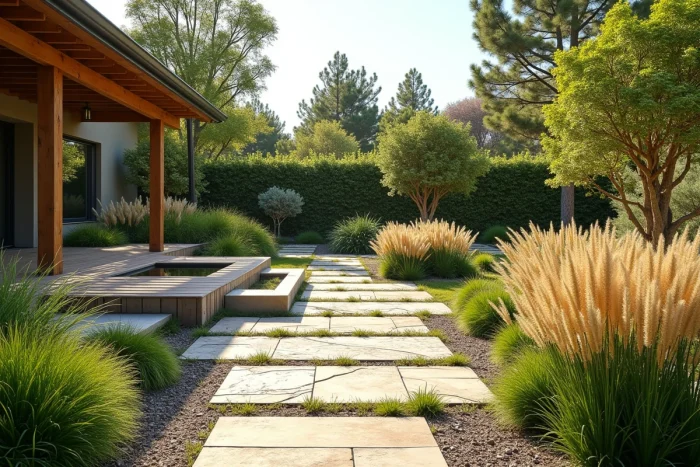
Transforming your garden into a dream space doesn’t require a complete overhaul. Ten targeted interventions are enough to change the perception of volume, comfort of use, and durability, even on a modest plot.
1. Mineral and organic mulching to reduce watering
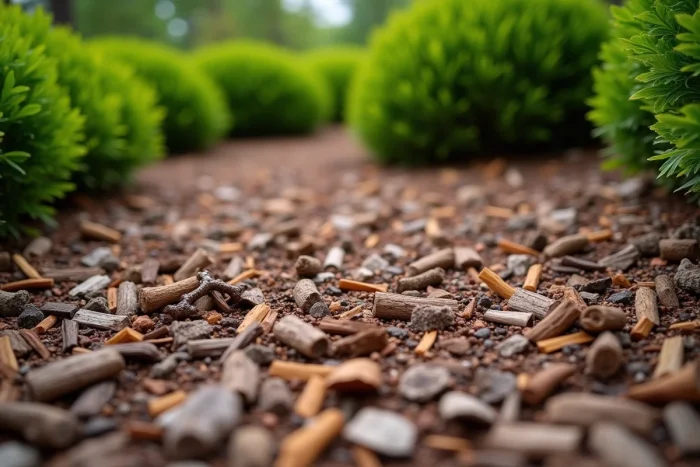
Mulching is the first lever for transforming a garden. A sufficiently dense layer of shredded material, pine bark, or pumice limits evaporation, slows down weeds, and visually structures the flower beds.
We recommend combining a organic mulch in the flower beds and a mineral mulch in pathways. The former nourishes the soil as it decomposes, while the latter stabilizes the passage areas without degrading. With repeated watering restrictions in recent years, this dual approach reduces reliance on hoses from the outset.
If you’re looking for more garden tips on Les Embellies Déco, you’ll see that mulching consistently comes up as fundamental before any planting.
2. Ornamental grasses replacing traditional lawns
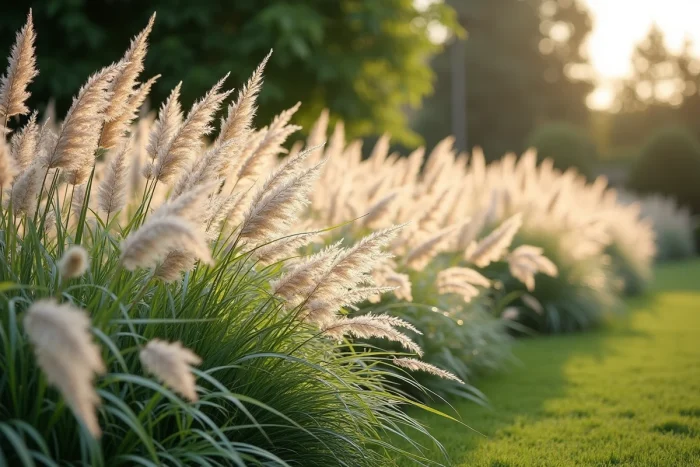
Traditional lawn areas are significantly declining in France due to repeated drought episodes. Unep and VAL’HOR have observed a rise in requests for drought-resistant gardens, with grasses like Miscanthus, Stipa tenuissima, or Pennisetum partially replacing lawns.
These plants bring movement, require little maintenance, and remain visually appealing even in winter. A reduced strip of grass for relaxation, bordered by massed grasses, offers a more refined look than a uniform lawn burned in July.
3. Low-voltage lighting to extend evening use
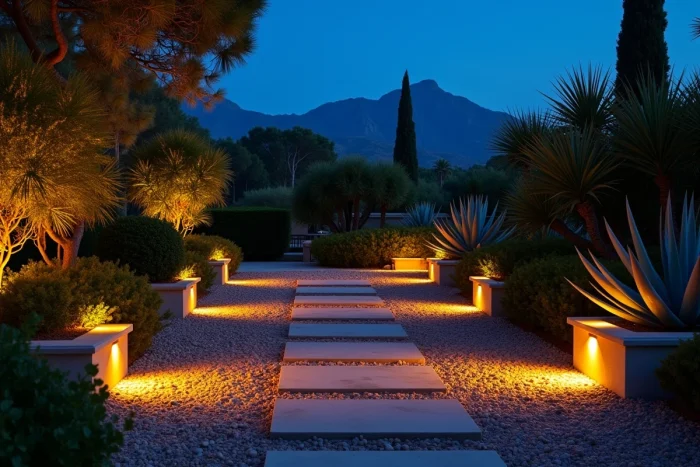
A garden without lighting loses half of its usage potential as soon as the sun sets. Low-voltage recessed spots along pathways, solar bollards at the edges of flower beds, and an LED string above the terrace are enough to create three distinct light levels.
Indirect lighting enhances volumes better than a central spotlight. Direct the light towards the foliage or the base of a wall rather than towards the table. The result radically changes the ambiance without heavy work.
4. Rainwater collector integrated from the design stage
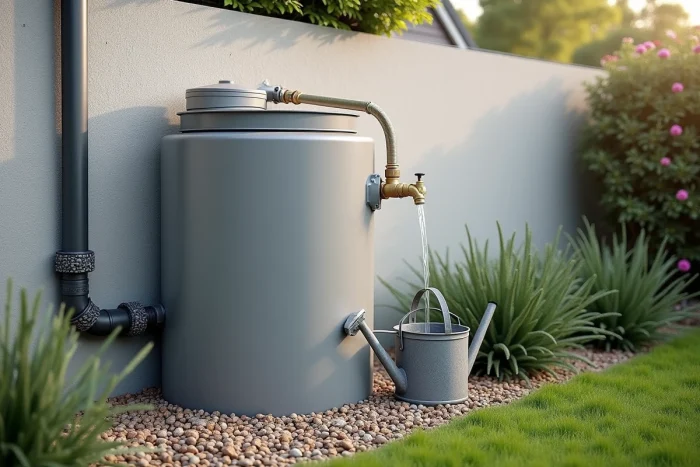
Field surveys by Unep show an increase in requests for rainwater collectors and integrated drip systems from the garden’s design stage. The National Rainwater Management Plan pushes in the same direction, with local PLUs sometimes encouraging infiltration on the plot.
A sufficiently sized collector, connected to the downspout, feeds a gravity drip network. The investment pays off in a few seasons, especially if your municipality implements regular drought orders.
5. Mixed wood and stone terrace to structure the space
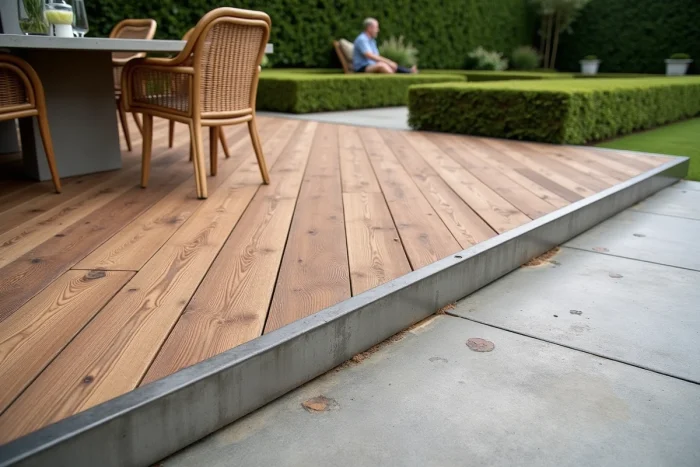
Combining two materials on the ground creates a natural boundary between the dining area and relaxation zone, without visually partitioning. Class 4 wood planks for the main seating and reconstituted stone paving for the passage form a durable and aesthetic duo.
Wood ages better when ventilated from below (joists on pedestals). Stone absorbs less heat than smooth concrete, preserving barefoot comfort in summer.
6. Landscape swale to manage runoff
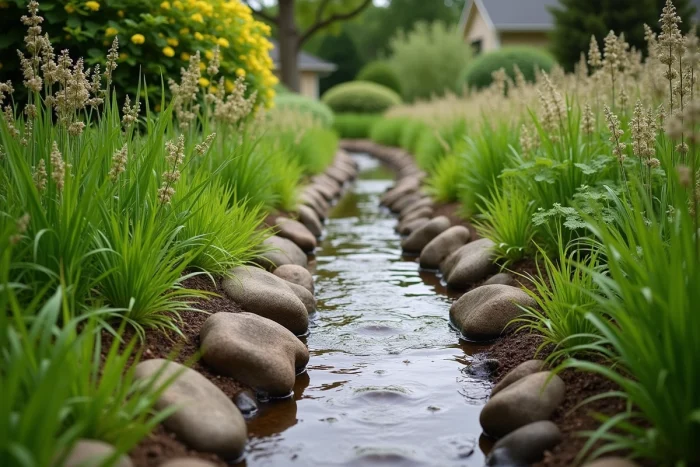
On sloped terrains or plots close to the house, a swale planted with irises, sedges, and willows captures runoff water and infiltrates it slowly. Cities like Lyon and Nantes integrate this logic into their urban planning prescriptions.
For an individual, the swale advantageously replaces a buried drain. It adds relief to the garden and attracts biodiversity. Its installation requires light earthworks, achievable in a weekend over a few meters.
7. Fixed furniture in fiber-reinforced concrete or Corten steel
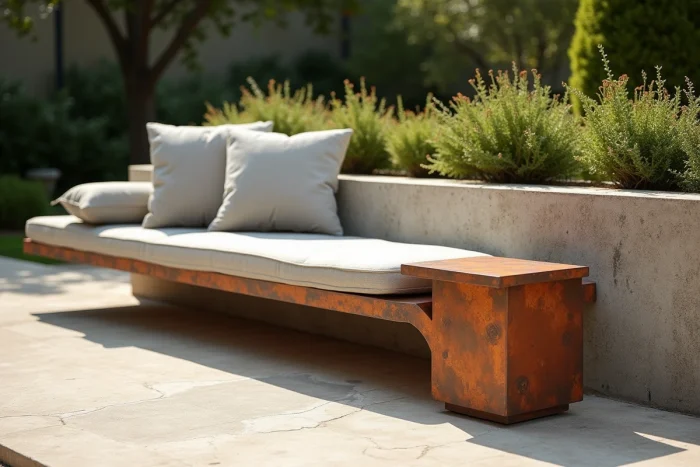
Lightweight resin furniture often ends up at the back of the garage after two winters. We observe that fixed elements in fiber-reinforced concrete or Corten steel structure the garden year-round, without seasonal storage.
A masonry bench with removable cushions costs less in the long run than a garden set that needs regular replacement. Corten steel, with its stabilized rust patina, integrates well into both contemporary gardens and more natural spaces.
8. Mediterranean ground cover perennials
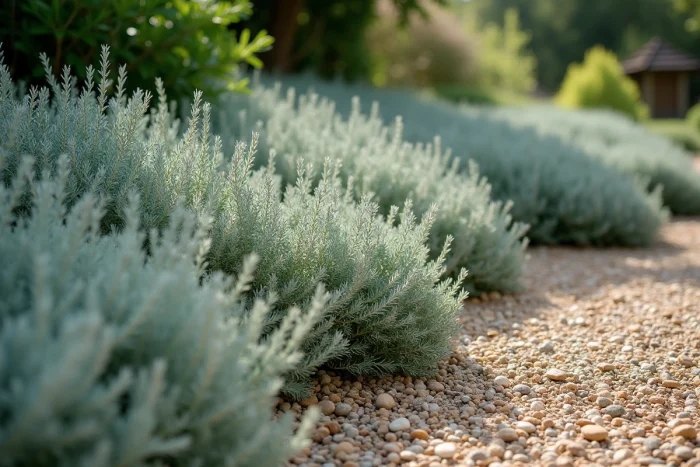
Thyme, lavender, everlasting flower, yarrow: these ground cover perennials tolerate drought and colonize tough areas (foot of walls, slopes, paving joints). Their staggered flowering attracts pollinators over several months.
A Mediterranean ground cover carpet effectively replaces grass in lightly trafficked areas. Here are the selection criteria to check before planting:
- Hardiness suitable for your climatic zone (check your municipality’s USDA zone)
- Ground-hugging height of less than fifteen centimeters to limit maintenance
- Tolerance to limestone if your soil is alkaline
9. Vegetated screen for creating privacy
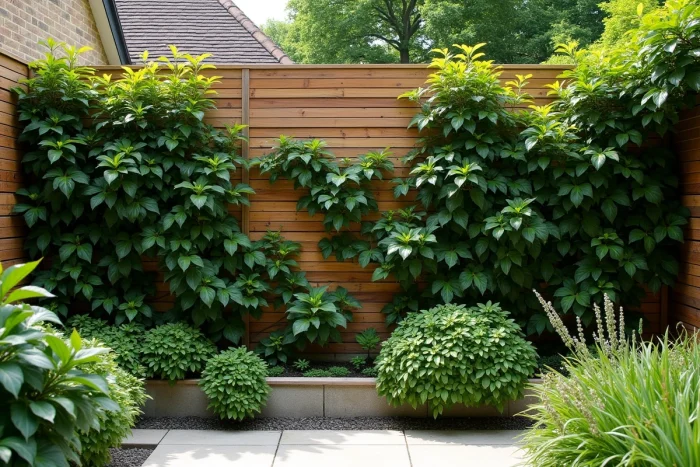
A screen made of wooden slats or perforated metal, supporting climbing plants (star jasmine, honeysuckle, clematis), filters views without enclosing the space. A slatted panel with angled slats blocks direct sight while allowing air circulation.
Placed between the terrace and the neighboring property, it delineates the garden without the heaviness of a monotypic hedge of thuja. The gradual vegetation softens the raw appearance of the panel by the second year.
10. Programmed drip irrigation by zone
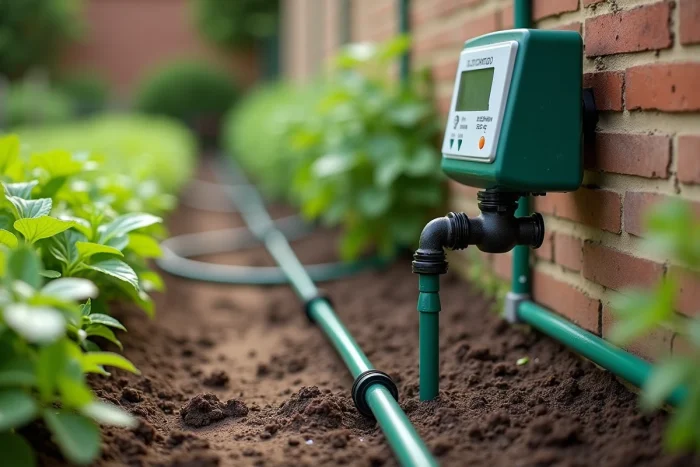
Improperly calibrated irrigation wastes water and promotes fungal diseases. Drip irrigation, zoned by area (flower bed, vegetable garden, hedge), delivers water to the base of each plant without wetting the foliage.
A two-way timer allows differentiation of frequency between established perennials and recent plantings. This zoning is a logical complement to the rainwater collector mentioned earlier. Together, they form an autonomous irrigation circuit for a good part of the dry season.
These ten interventions can be combined in any order. Start with mulching and water management, which are crucial for the success of everything else. Decorative additions (lighting, furniture, screens) will enhance a garden that is already well-structured agronomically.