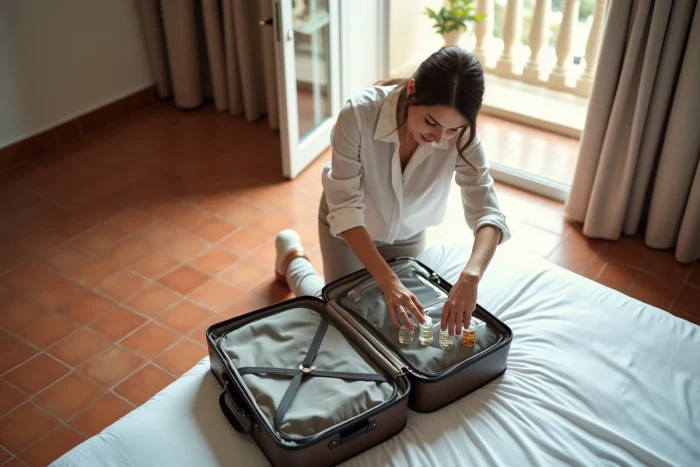
Between Spain and France, two member countries of the European Union, no quantitative allowance applies to perfumes. Customs regulations treat this product differently from alcohol or tobacco, for which indicative thresholds exist. Bringing back perfume from Spain is based on a single criterion: personal use.
Tax threshold for perfumes coming from Spain: what EU law actually provides
Perfumes are not included in the list of goods subject to excise duties within the EU. This tax category concerns alcohol, tobacco, and fuels, not cosmetics or eau de toilette. The direct consequence: no value ceiling, no maximum number of bottles, no limit in milliliters is set by EU regulations for a traveler returning from Spain to France.
We recommend not to confuse this absence of a threshold with total freedom. French Customs retains a discretionary power based on the manifestly non-commercial nature of the purchases. This deliberately vague criterion allows agents some leeway in interpretation during a check.
To understand the quantity of perfume allowed from Spain according to Voyagoo, it is important to remember that the fundamental distinction does not concern a number, but the intention of use behind the purchase.
Indicators of resale: the actual criteria for customs officers during a check
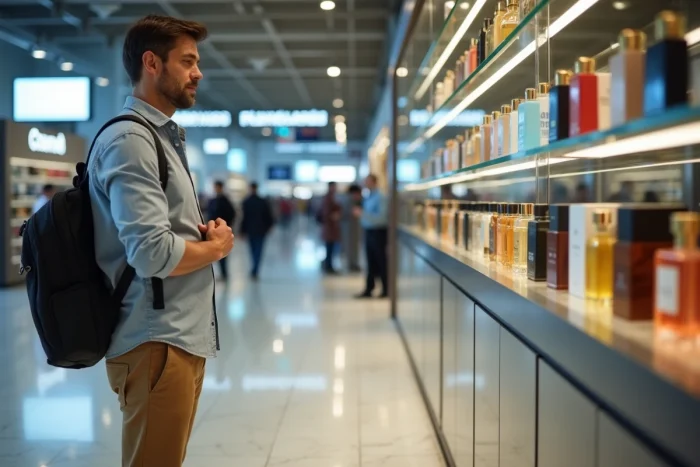
The absence of a quantified quota does not mean the absence of risk. Customs officers rely on a range of indicators to determine if a traveler is carrying perfumes for commercial purposes. We observe that this evaluation method remains poorly understood by most travelers.
The indicators that trigger a thorough check are concrete:
- The presence of multiple identical bottles of the same perfume, suggesting a wholesale purchase intended for resale rather than personal use or gifts
- The absence of a coherent logic between the transported products and private use (for example, twenty bottles of different brands with no connection to reasonable personal consumption)
- The frequency of trips back and forth between France and Spain, which customs officers can check via toll data or transport tickets
- The retention of original commercial packaging in quantity, with price tags, which suggests stock rather than a personal purchase
As soon as a purchase appears commercial, the administration can proceed with taxation or seizure. The burden of proof then rests on the traveler, who must demonstrate the personal use of their purchases.
Value allowances: confusion with non-EU countries
A common mistake is to apply the allowances for returns from Spain that are intended for third countries. These ceilings only concern travelers entering the EU from a non-member country.
For a return from a non-EU country, perfumes fall under the overall value allowance: 300 euros by land or rail, 430 euros by air or sea. Travelers under 15 years old benefit from a reduced allowance of 150 euros. These amounts cover all goods brought back (excluding alcohol and tobacco, which have their own thresholds), including perfumes.
A traveler returning from Andorra, for example, after passing through Spain, falls under this third country regime. Since Andorra is not an EU member, the rules change radically, even if the physical route passes through Spanish territory.
Cabin restrictions on airplanes and land transport: two distinct regimes
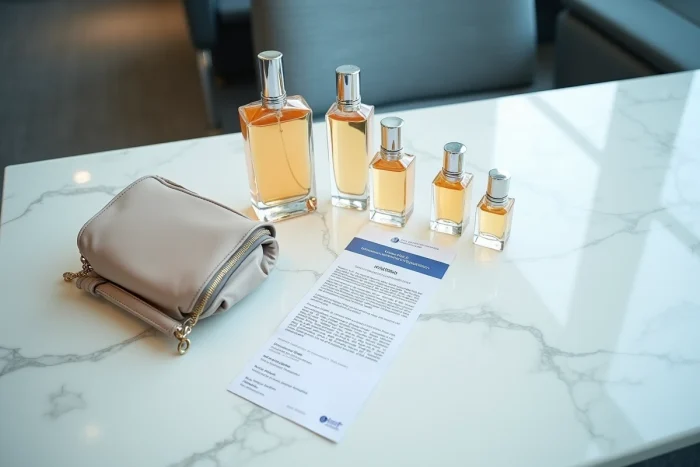
The mode of transport modifies practical constraints, but not the customs framework. On airplanes, aviation security rules limit liquids in the cabin to 100 ml per container, in a transparent plastic bag with a maximum capacity of one liter. This restriction concerns flight safety, not customs.
A traveler who places their perfumes in checked luggage has no volume limitation related to aviation security. The only limit remains the personal use criterion mentioned earlier. In a car, no packaging constraints are added.
We observe that many travelers confuse the 100 ml rule in the cabin with a customs limit. These are two distinct regulations, enforced by different authorities (airport security on one side, customs on the other), at different times during the journey.
Customs declaration and the DéclareDouane application
For a return from Spain to France with only perfumes for personal use, no customs declaration is required. The declaration obligation applies to cash (from 10,000 euros), regulated goods, and products subject to excise duties beyond indicative thresholds.
The DéclareDouane application, developed by French Customs, facilitates formalities for travelers carrying goods subject to declaration. For perfumes brought back from another member state, it has no direct utility, unless the traveler is simultaneously carrying alcohol or tobacco in significant quantities.
Keeping receipts remains the most effective precaution. In case of a check, they allow proof of the price paid, the place of purchase, and the date, three elements that establish the coherence of a personal purchase. A traveler without proof facing a quantity deemed suspicious finds themselves in a fragile position, even if their purchases were genuinely intended for private use.