Nearly 30% of heat loss in a home occurs through the roof. The choice of insulation material, combined with the quality of installation, directly affects energy performance, thermal comfort, and the annual heating bill. Some insulators, despite being known for their effectiveness, can lose up to 20% of their performance if poorly installed.
The criteria for thermal resistance, stability over time, and compatibility with the attic configuration often involve technical compromises. Recent thermal regulations impose stricter requirements, but the diversity of materials on the market complicates selection.
What criteria determine good attic insulation?
Insulating your attic leaves no room for approximation. The thermal resistance, indicated by the R value, measures the ability of the insulator to slow down heat transfer. The higher the number, the more effective the thermal barrier. For converted attics, regulations set a minimum value to achieve, ensuring lasting comfort and better energy management.
Another point of vigilance: thermal bridges. Invisible to the naked eye, they allow heat to escape and reduce the feeling of well-being. To eliminate them, attention must be paid to air tightness: installation of a vapor barrier, precise treatment of joints, and vigilance on every detail. Humidity, on the other hand, creeps in silently and can deteriorate the effectiveness of insulation, even the structure itself. Hence the usefulness, beforehand, of a thermal diagnosis or energy audit to identify weak points and choose the best strategy.
Comfort also comes from acoustic insulation. Reducing impact noise or external disturbances under the roof improves daily life, in winter as well as in summer. Each project has its needs: surface area, configuration, expectations for summer or winter comfort. Need to go further? To learn more about the criteria to examine and the materials to prioritize, find out more on Idylle Habitat to refine your choices.
Overview of insulating materials: advantages, limitations, and recommended uses
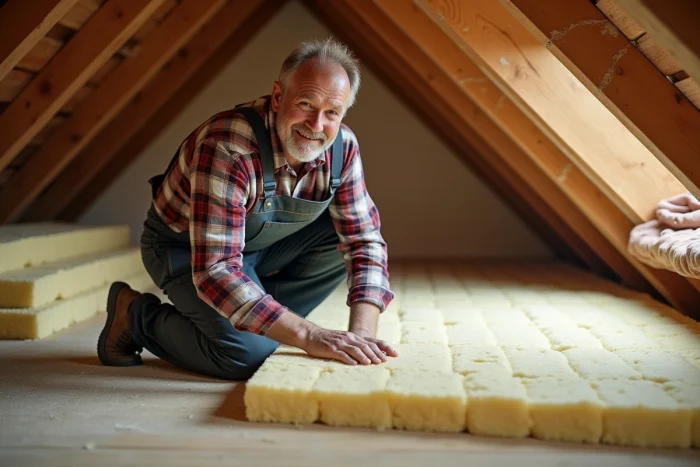
The choice of insulating material determines the success of attic insulation. Among the classics, glass wool and rock wool, known as mineral insulators, still hold their ground. Their thermal performance and controlled cost still attract many professionals. These materials, available in rolls or panels, are suitable for both blown insulation (for lost attics) and traditional installation (for converted spaces). Their thickness ensures, when properly installed, an effective barrier against heat loss while limiting thermal bridges.
In light of ecological awareness, bio-based insulators are gaining popularity. Cellulose wadding, made from recycled paper, or plant wools, display excellent performance, particularly for thermal lag. This delay before heat passes through the insulator is valuable for ensuring summer comfort under the roofs. Blown insulation based on cellulose wadding is particularly well-suited for difficult corners or irregular surfaces.
The choice of material is adjusted according to the configuration of the place, the climate, the desired acoustic insulation, and the available budget. The installation method also has its influence. Sarking, an external insulation technique, is aimed at major renovations or new constructions, offering a high-performance thermal envelope. For each solution, the thermal performance is evaluated by crossing the conductivity of the material and the thickness installed.
Here is an overview of the main materials and their specificities:
- Mineral insulators (glass wool, rock wool): reliable, easy to install, they fit into most existing configurations.
- Cellulose wadding: an ecological alternative, very effective in summer, ideal for blown insulation in hard-to-reach attics.
- Sarking: a technical solution to gain living space and enhance performance, all with a higher investment, but a result that meets expectations.
Prices, financial aid, and tips for choosing your insulation wisely
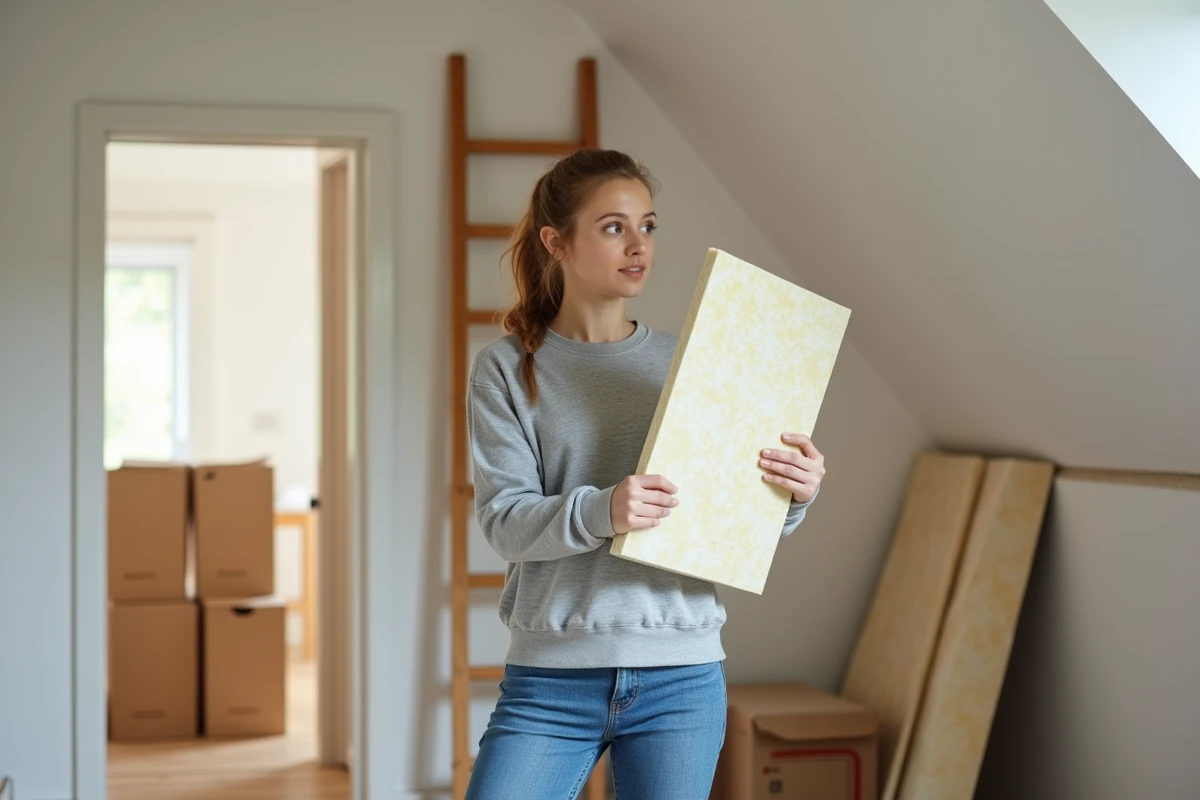
The cost of insulation depends on several factors: selected material, technique used, attic configuration. For lost attics, blown insulation starts at around €25/m². For converted attics, adding panels or rolls quickly increases the cost, particularly due to the complexity of installation and the requirement for impeccable air tightness.
On the budget side, financial aids exist to support households. MaPrimeRénov’ applies to homeowners and landlords, provided they go through a RGE (Recognized Guarantee of the Environment) company. Energy savings certificates (CEE) can be combined with a reduced VAT of 5.5% and the eco-PTZ (zero-interest loan dedicated to energy renovation work). This range of aids reflects the desire to modernize and optimize the French real estate stock.
To benefit from these schemes, a minimum thermal resistance must be respected: R ≥ 7 m²·K/W for lost attics, 6 m²·K/W for converted attics. This threshold determines eligibility and guides the choice of material. A energy audit or thermal diagnosis allows for refining the strategy, detecting thermal bridges, and prioritizing interventions.
Before you start, keep these precautions in mind:
- Ensure that the chosen company has the RGE qualification.
- Request multiple quotes to analyze the value for money of each proposal.
- Weigh the expected benefits on the energy performance of the home and the energy savings in the medium term.
Properly insulating your attic promises a more temperate home, a better-preserved wallet, and a habitat aligned with current climate challenges. It’s up to each person to write the next chapter, between regained comfort and reduced bills.